Summer in Cascais
Summer of 2026 in Lisbon was ruined by my hand-accident and the recovery process. Read my story on that here. An Accidental Artist. But three weeks into the accident, I summoned courage to start small and complete two small paintings mostly with my left hand.
This is one of them. It started with something else about grief. Grief has its own geometry, and I was trying to paint that geometry. That painting existed for a while. I worked it, reworked it, but the realism was unfulfilling.

Three Graces
Then in the Spring I visited Spain and saw the three graces in Malaga.

In Picasso's Three Graces (his take on that ancient, endlessly repeated composition, inspired by Greek mythology)— there is a silent choreography. I borrowed the composition.
I didn't know then that the image was lodging itself somewhere, waiting.
When I came home, it all came together the composition of the three graces overlapped on the top of memories and time.
Caregiving, Late in Life
Now, this is a painting about the relationship between a caregiver and the person they care for — specifically in those late years, the eighties and nineties, when memory begins to loosen its grip and the body becomes the primary language. What is trust when words fail? What is love when the person in front of you may not remember your name tomorrow, but their hand still knows the weight of yours?
I wrote a book about this — about caregiving, about what it asks of us, about the strange intimacy of tending to someone who once tended to you. This painting is the visual residue of everything I couldn't fit into that book. The *Three Graces* gave me the architecture: three bodies in relation. But my own life gave me the content — the way one figure fades isn't a flaw in the composition. It *is* the composition. It's what caregiving is: staying present with someone as they recede, and finding that the relationship doesn't end — it just changes shape.

This is a painting about the relationship between a caregiver and the person they care for — specifically in those late years, the eighties and nineties, when memory begins to loosen its grip and the body becomes the primary language. What is trust when words fail? What is love when the person in front of you may not remember your name tomorrow, but their hand still knows the weight of yours?
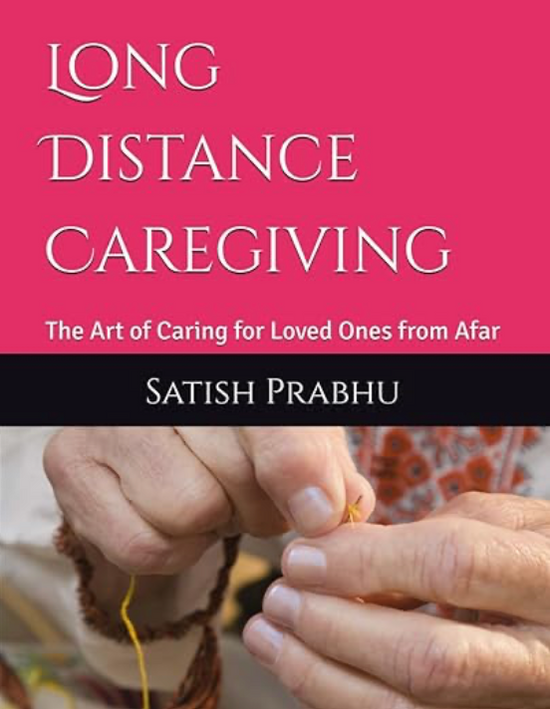
I wrote a book about this The Art of Caring for Loved Ones from Afar. about caregiving, about what it asks of us, about the strange intimacy of tending to someone who once tended to you. This painting is the visual residue of everything I couldn't fit into that book. The Three Graces gave me the architecture: three bodies in relation. But my own life gave me the content.
One Hand
I should say this plainly, because it belongs in the record of this painting: I finished this painting my left hand — not my dominant hand. My right hand is out of operation for three months. An Accidental Artist. There is a great deal I simply cannot do with it. The kind of conscious mark-making, the effective brushwork that comes from years of trained intention in the other hand, isn't available to me the same way right now. So a good portion of this painting was made with my fingers instead — the index finger of my left hand, pressing and dragging paint directly onto the canvas rather than laying it down with a brush. You can see it if you look closely. The texture is different. Less controlled, more direct — skin against canvas instead of bristle against canvas. It felt right, in the end, that a painting about a hand that still knows the weight of another hand should itself be made, in part, by hand alone.
What Remains

The title — The Memories and Time — is not about nostalgia. It's about the two forces that act on every caregiving relationship simultaneously: memory dissolving, time continuing anyway. The painting holds both.
I offer this one as a salute — to every family sitting beside a parent or partner in these later years, learning a new vocabulary made entirely of touch and patience. You are still painting the Three Graces, even when one figure has gone quiet.
If This Painting Speaks to You
The themes in this painting — presence, memory, and the quiet labor of love — run through much of my work. A few pieces that share this emotional territory:
- Eternal Conversations (Egypt) — two figures in a timeless exchange, painted on location in Egypt.
- The Conversations (Egypt) — a meditation on connection across distance and difference.
- The Tabacaria — A Pessoa Affair — solitude and presence, inspired by Fernando Pessoa's Lisbon.
I also wrote at length about the experience of caring for aging parents from afar — the guilt, the love, and the impossible math of distance. If this painting resonates, you may find that essay equally close to home: The Art of Caring for Loved Ones from Afar.
On the origins of this creative life — how painting chose me before I chose it — you might also enjoy: An Accidental Artist.